
Last Updated on November 14, 2026 by Ellen Christian
It’s almost boot season again, and that has me thinking about how to care for leather boots. One year, I simply put my boots in the back of the closet when the weather warmed up and forgot about them. I know now that wasn’t the best way to take care of them.
Posts may be sponsored. This post contains affiliate links, which means I will make a commission at no extra cost to you should you click through and make a purchase. As an Amazon Associate I earn from qualifying purchases.
Leather boots can be an investment, especially if you choose a quality pair that you want to wear for years. Whether you prefer ankle boots, tall leather boots, cowboy boots, or classic riding boots, a little regular maintenance can help keep them looking their best.
Here’s how to clean, condition, protect, and store leather boots so you can enjoy wearing them season after season.
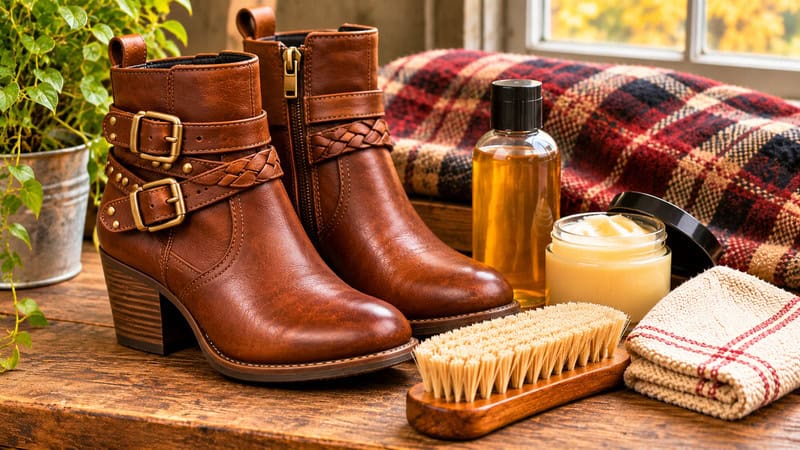
Table of Contents
Why Is Leather Boot Care Important?
Unlike many synthetic materials, genuine leather needs occasional cleaning and conditioning to stay flexible and attractive.
Without proper care, leather can become dry, stiff, discolored, or cracked. Dirt, road salt, and moisture can also damage the finish over time.
Taking care of your boots doesn’t have to be complicated. The important thing is choosing products that are appropriate for the type of leather and following a regular cleaning routine.
What Do You Need to Care for Leather Boots?
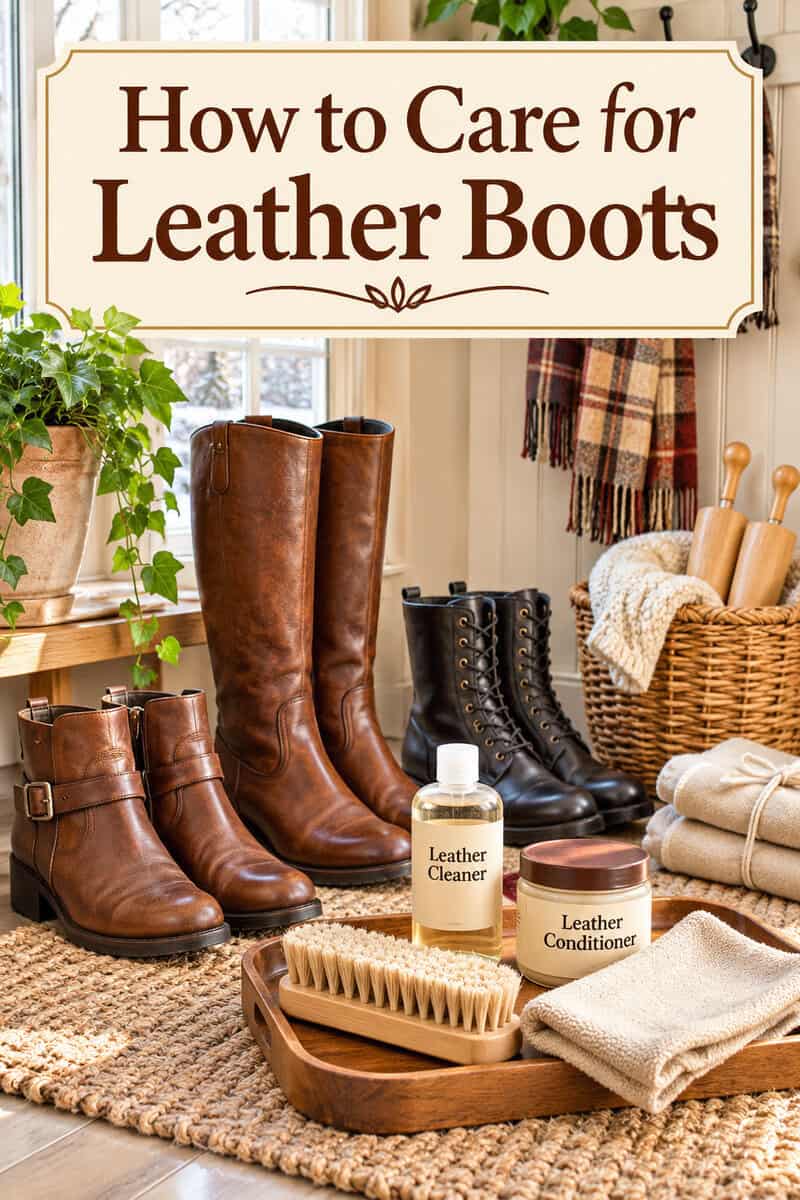
Before you start, gather a few basic supplies:
- Soft boot brush or horsehair brush
- Clean microfiber cloths
- Leather cleaner suitable for your boots
- Leather conditioner
- Water-repellent treatment approved for the leather type
- Boot shapers or supports for tall boots
- Shoe trees, if appropriate for your boots
You don’t necessarily need every product on this list. For most smooth leather boots, a soft brush, a gentle leather cleaner, and a compatible conditioner are good starting points.
Always check the boot manufacturer’s care instructions before applying anything.
If you have several pairs of leather boots, a leather boot care kit can make regular maintenance easier. Look for one that includes a soft cleaning brush, leather cleaner, and conditioner suitable for your boots. Always check the manufacturer’s care instructions before using any product, especially on suede or nubuck.
How to Clean Leather Boots Step by Step
1. Remove Loose Dirt and Dust
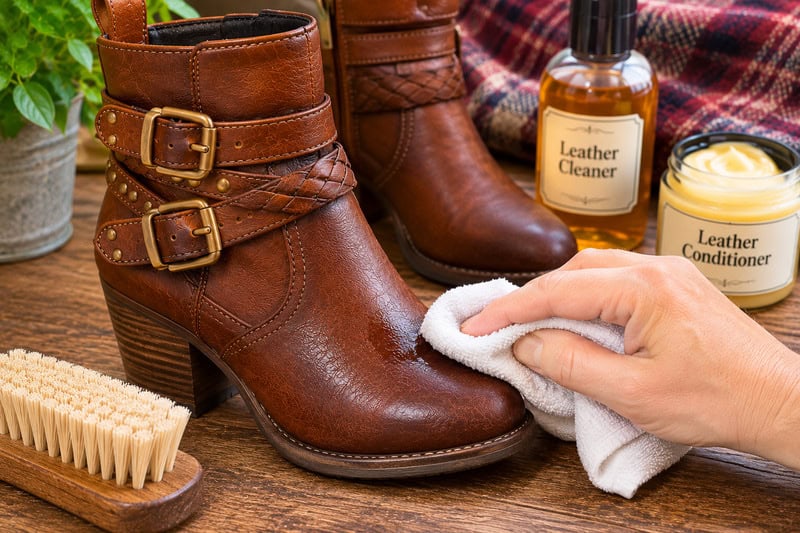
Start by brushing away loose dirt, dust, and dried mud.
A soft brush works well for everyday cleaning. Pay attention to the seams, stitching, and the area where the upper meets the sole.
If your boots have laces, remove them so you can clean around the eyelets and tongue.
Avoid using a stiff brush on delicate or polished leather because it may scratch the finish.
2. Wipe Down the Leather
Use a slightly damp microfiber cloth to wipe away any remaining surface dirt.
Don’t soak the leather or place your boots under running water.
If a damp cloth isn’t enough, use a leather cleaner specifically recommended for your type of boots.
Apply the cleaner according to the manufacturer’s directions and test it on a small, inconspicuous area first.
3. Let Your Boots Dry Naturally
If your boots become wet during cleaning or from rain or snow, let them dry naturally at room temperature.
You can loosely stuff them with clean, unprinted paper to help absorb moisture and maintain their shape. Replace the paper if it becomes damp.
Never put leather boots directly next to a radiator, woodstove, heating vent, or other strong heat source.
Excessive heat can dry out leather and may cause cracking, shrinking, or damage to adhesives.
4. Apply Leather Conditioner
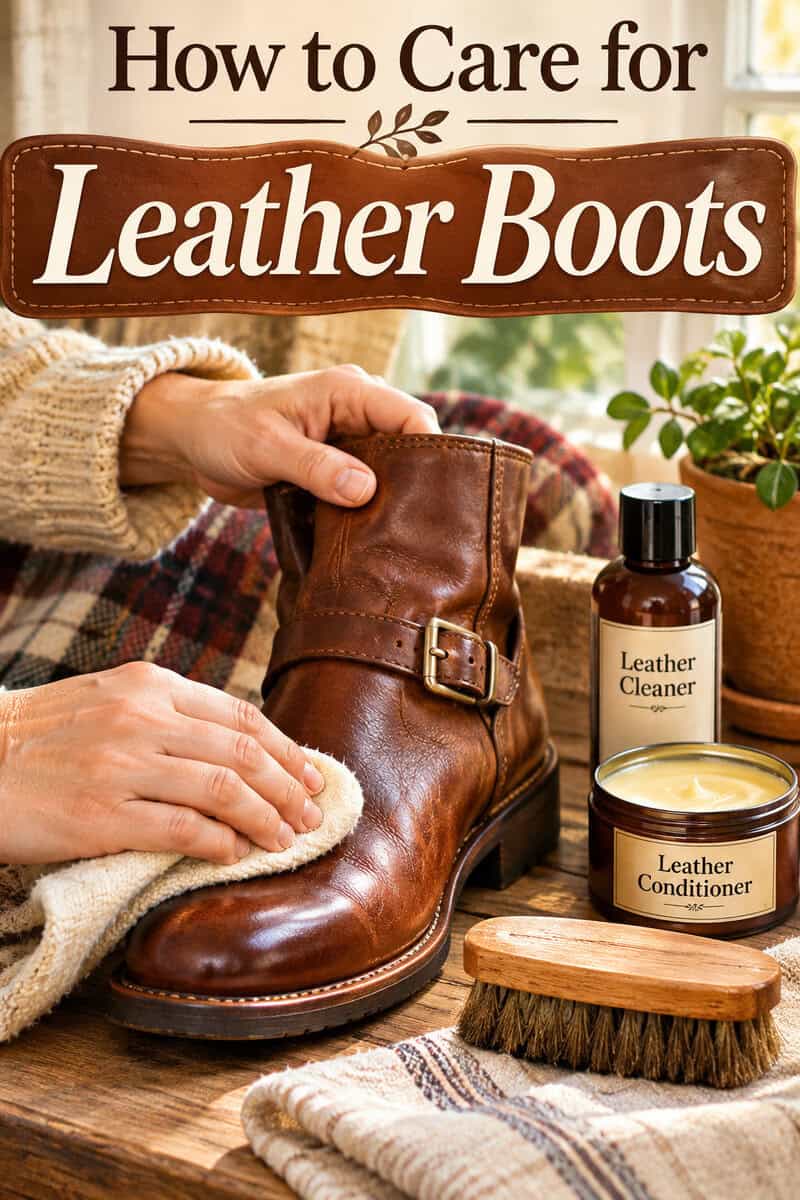
Once your boots are clean and dry, apply a conditioner designed for their leather type.
Leather conditioner helps maintain flexibility and can reduce dryness.
Use a small amount and follow the product directions. Applying too much conditioner may leave a greasy residue or darken the leather.
Some leather finishes don’t require conventional conditioning, so check the manufacturer’s recommendations first.
5. Protect Your Boots From Moisture
A suitable water-repellent treatment can help protect leather boots from rain, snow, and everyday moisture.
The right product depends on the leather finish.
Smooth leather, suede, nubuck, and oil-tanned leather may require different treatments. Avoid assuming that one waterproofing spray or oil is appropriate for every pair.
Some oils and waxes can permanently darken leather, so always test the product first.
Remember that a water-repellent treatment doesn’t necessarily make boots completely waterproof.
How to Care for Different Types of Leather Boots
Smooth Leather Boots
Smooth leather is common in ankle boots, riding boots, and dress boots.
Remove dirt with a soft brush, wipe the surface gently, and use a suitable leather conditioner when needed.
If your boots have a polished finish, you may also be able to use a matching shoe cream or polish.
Suede and Nubuck Boots
Suede and nubuck require different care from smooth leather.
Use a suede brush to lift dirt and restore the texture. For stubborn marks, try a suede eraser or cleaner designed for these materials.
Avoid using ordinary leather conditioner, wax, or shoe polish on suede unless the manufacturer specifically recommends it.
Oil-Tanned Leather Boots
Oil-tanned leather is often used for casual, outdoor, and work boots.
Some oil-tanned boots benefit from a compatible leather oil or conditioner, but others have specific care requirements.
Check the manufacturer’s instructions before applying mink oil, wax, or other treatments because these products can change the color and appearance.
Different types of leather need different care products. Red Wing Shoes’ leather care guide offers additional information about choosing appropriate cleaners, conditioners, and protective treatments for leather footwear. Always check the care instructions for your particular boots before applying any product.
How to Protect Leather Boots in Winter
Winter can be especially hard on leather boots.
Snow, slush, moisture, and road salt can leave stains and damage the finish if they’re allowed to remain on the leather.
After wearing your boots in winter weather:
- Brush away loose dirt.
- Gently remove salt residue with a cloth and a cleaner approved for your leather.
- Let the boots dry naturally.
- Condition them when needed.
- Reapply an appropriate protective treatment according to the product instructions.
If you wear leather boots regularly in Vermont winters, it’s worth checking them often for salt stains and moisture damage.
How to Break In Leather Boots
One of the most important things you can do is start with boots that fit properly.
Leather boots may soften and become more comfortable with wear, but they shouldn’t be painfully tight.
Wear new boots for short periods at first and gradually increase the amount of time you spend in them.
Comfortable socks and properly fitted insoles may help.
Avoid soaking boots in water, using excessive heat, or trying other aggressive methods to stretch them. These techniques can damage the leather or affect the fit.
How to Store Leather Boots Properly
At the end of boot season, don’t simply push your boots into the back of the closet.
Clean them first and allow them to dry completely.
For tall boots, use boot shapers or supports to help prevent the shafts from folding over.
Store leather boots in a cool, dry place with good airflow, away from direct sunlight and excessive heat.
A breathable fabric storage bag can help protect them from dust.
Avoid sealing damp leather boots in plastic bags because trapped moisture can encourage mildew.
Once your boots are clean and ready to wear, there are plenty of ways to style them during colder weather. Check out my winter boho style tips for outfit ideas featuring ankle boots, cowboy boots, cozy sweaters, and jeans.
How Often Should You Condition Leather Boots?
There isn’t one schedule that works for every pair.
The frequency depends on the type of leather, how often you wear your boots, and the conditions they’re exposed to.
Boots worn frequently in wet or snowy weather may need more attention than dress boots worn occasionally.
Look for signs of dryness, stiffness, or dullness, and follow the manufacturer’s conditioning recommendations.
It’s better to use the correct product when needed than to apply heavy layers of conditioner too often.
Frequently Asked Questions About Leather Boot Care
Can you clean leather boots with soap and water?
A slightly damp cloth is often enough for light surface dirt. For deeper cleaning, use a leather cleaner approved for your boots. Ordinary soaps and detergents may remove oils or damage certain finishes.
Can you wear leather boots in the snow?
Some leather boots are designed for winter weather, but others aren’t. Check whether your boots are water-resistant or waterproof and whether they have suitable traction for slippery conditions.
How do you keep tall leather boots from falling over?
Boot shapers or supports can help tall boots maintain their shape during storage. Avoid folding the shafts for long periods.
Can you use the same conditioner on suede and smooth leather?
Usually not. Suede and nubuck generally require specialized care products that preserve their texture.
How do you dry wet leather boots?
Let them air-dry naturally at room temperature. Avoid direct heat, and use clean, unprinted paper inside the boots if needed to help absorb moisture.
Final Thoughts
Learning how to care for leather boots can help you get more wear from your favorite footwear.
Start with boots that fit properly, clean them regularly, use products suited to the leather, and store them carefully when the season ends.
Whether you love classic riding boots, comfortable ankle boots, or a favorite pair of cowboy boots, taking a little extra time to care for them can help keep them looking beautiful for years.

The Socialite’s Closet is a style and beauty destination created for women over 45 who want to feel confident, modern and effortlessly put together. Here you’ll find fashion inspiration, beauty tips and easy-to-follow styling ideas designed for real life.
Great tips! I like your boots! I’ve had my cowboy boots for almost 20 years now – they are on their 3rd set of soles – if you care for leather it will take good care of you.
That is so true, Patty!
My daughter has five pair of cowboy boots, that’s all she wears. These are some great tips, thanks for sharing.
Always glad to help!